Administrative Penalty Case File:What is an administrative penalty case file?
Q: What is an administrative penalty case file?
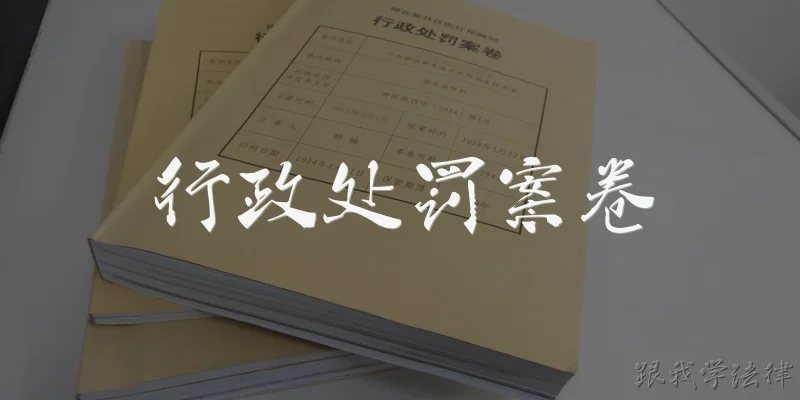
A: An administrative penalty case file is the official record compiled by a government agency when it investigates and sanctions a violation of administrative regulations. Unlike criminal case files, which focus on offenses against society, an administrative penalty case file documents regulatory breaches such as environmental violations, tax non-compliance, or workplace safety failures. The file typically includes the initial complaint or inspection report, evidence gathered during the investigation, notices of violation, hearing transcripts, the final penalty decision, and proof of payment or appeal. Its primary purpose is to ensure due process, transparency, and accountability in enforcement actions. Legal professionals, compliance officers, and regulated entities use these files to understand the basis for penalties, prepare defenses, or appeal decisions. Because administrative penalties often carry financial and reputational consequences, maintaining a complete and accurate case file is critical for both the agency and the accused party. In many jurisdictions, these files are subject to public disclosure laws, making them valuable resources for researchers and journalists examining regulatory enforcement trends.
Q: What documents are typically included in an administrative penalty case file?
A: A standard administrative penalty case file contains a range of documents that trace the enforcement process from start to finish. First, there is the initiating document, such as a citizen complaint, inspection report, or audit finding. Next comes the investigation record, which may include witness statements, photographs, test results, and financial records. The agency then issues a notice of violation or a formal complaint, which outlines the alleged misconduct and the proposed penalty. If the accused party requests a hearing, the file must include the hearing notice, transcripts or recordings, and any written submissions from both sides. Following the hearing, the file contains the final order or decision, which states the findings, legal reasoning, and penalty amount. Finally, the file should document post-decision actions, such as proof of penalty payment, appeal filings, or compliance verification. In some cases, settlement agreements or consent orders replace the final decision. Missing documents can weaken the file's legal integrity, so agencies typically use standardized checklists to ensure completeness. Understanding the components of these files helps legal teams assess procedural errors and build effective appeals.
Q: How can the public or legal professionals access administrative penalty case files?
A: Access to administrative penalty case files depends on jurisdiction and the nature of the violation. In many countries, freedom of information or open records laws allow the public to request copies, though exemptions often protect personal privacy, trade secrets, or ongoing investigations. Legal professionals representing a party in the case usually have broader access through discovery rules or by filing a notice of appearance. For those not directly involved, the process typically begins with a written request to the specific agency that issued the penalty, citing the relevant statute. Agencies may charge copying fees and can redact sensitive information. Some jurisdictions publish penalty decisions and case files online in searchable databases, especially for environmental, securities, and labor violations. If a request is denied, requesters can often appeal to an administrative tribunal or court. It is advisable to consult a local attorney familiar with administrative law, as procedures vary widely. Accessing these files serves important public interests: it allows affected communities to monitor enforcement, enables businesses to benchmark compliance, and gives researchers data to analyze regulatory effectiveness.
Words of experience
Common scenarios of "Administrative Penalty Case File"
【Lawyer】 Good morning, Officer Chen. I'm here to review the administrative penalty case file for my client, Mr. Wang. Could you please provide the file for inspection?
【Officer】 Good morning, Attorney Li. I have the file ready. Before you review it, please sign this acknowledgment form confirming that you have received access to the case file.
【Lawyer】 Of course. I'll sign it now. Can you confirm that this file contains all the documents related to the penalty, including the investigation report, evidence, and the penalty decision?
【Officer】 Yes, the file includes the notice of violation, the investigation records, witness statements, photographic evidence, the penalty decision, and the service receipt. It's all there.
【Lawyer】 Thank you. I notice that the investigation report is dated March 15, but the incident occurred on March 10. Is there any explanation for the delay in documentation?
【Officer】 The delay was due to the need to gather additional evidence from the scene and interview witnesses. The report was finalized as soon as all information was collected.
【Lawyer】 I see. In the witness statements, there is a statement from Mr. Zhang, but it lacks his signature. Is this an oversight? Without a signature, the statement's authenticity could be questioned.
【Officer】 Let me check. You're right; it appears Mr. Zhang forgot to sign. We will contact him to sign it as soon as possible. This does not affect the validity of the overall case.
【Lawyer】 I must insist that it be corrected. Also, I would like to request a copy of the entire file for my records. As per the Administrative Penalty Law, the party has the right to access and copy the case file.
【Officer】 That's correct. We can provide copies, but there is a fee for copying and mailing. Would you like to pay now or later?
【Lawyer】 I'll pay the fee now. Please provide me with a receipt. Also, I want to confirm that the penalty decision includes the right to a hearing and the deadline for requesting one.
【Officer】 Yes, the decision states that you have the right to request a hearing within three days of receiving the decision. The decision was served on March 20, so the deadline is March 23.
【Lawyer】 My client received the decision on March 22, not March 20. The service receipt shows March 22. That means the deadline should be March 25. This is a critical discrepancy.
【Officer】 Let me verify the service receipt. I see that the receipt indicates March 22. There might be a clerical error in the decision date. We will correct it accordingly.
【Lawyer】 Thank you. I also noticed that the penalty amount is 10,000 yuan, but the legal provision cited allows for a maximum of 5,000 yuan for this type of violation. Can you explain this?
【Officer】 The penalty was based on the severity of the violation and previous warnings. The provision allows for an increase in cases of repeat offenses. Mr. Wang had a prior warning last year.
【Lawyer】 I see. But the file does not contain any documentation of that prior warning. Without evidence, the increased penalty may be unjustified. Please provide that documentation.
【Officer】 We will locate the prior warning record and add it to the file. If it's not available, we will reassess the penalty amount.
【Lawyer】 I appreciate your cooperation. I will also need a copy of the corrected service receipt and the witness statement once signed. Please notify me when they are ready.
【Officer】 Certainly. We will make the corrections and copies, and contact you within three working days. Thank you for bringing these issues to our attention.