
Work-related Injury Benefits for Public Institution Employees:What are work-related injury benefits for public institution employees in 2026?
Q: What are work-related injury benefits for public institution employees in 2026?
A: Work-related injury benefits for public institution employees in 2026 are governed by the Regulation on Work-Related Injury Insurance, as amended, and the 2026 Ministry of Human Resources and Social Security (MOHRSS) implementation guidelines. These benefits cover medical expenses, rehabilitation, assistive devices, hospital meal allowances, and lost wages during treatment. If a work injury causes disability, employees receive a one-time disability subsidy and monthly allowances based on disability grade (1-10). For death, survivors receive a funeral subsidy, dependent pension, and a one-time work-related death subsidy. According to the MOHRSS 2026 Work-Related Injury Insurance Statistics Bulletin, the national average one-time death subsidy reached 1,036,420 yuan, and public institution employees are fully included. Employers must report injuries within 30 days, and employees can apply within one year. Benefits are paid from the work-related injury insurance fund, ensuring consistent protection across public institutions.
Q: How are work-related injury benefits calculated for public institution employees in 2026?
A: In 2026, work-related injury benefits for public institution employees are calculated based on the employee's average monthly contributory wage and the national disposable income per capita. The one-time disability subsidy follows a statutory multiplier: 27 months for grade 1, 25 months for grade 2, down to 7 months for grade 10. Monthly disability allowances are 90% of the employee's wage for grade 1, 85% for grade 2, 80% for grade 3, and 75% for grade 4. For work-related death, the one-time subsidy equals 20 times the national per capita disposable income of urban residents in the previous year. The MOHRSS 2026 notice confirms this figure as 1,036,420 yuan. Dependent pensions are 40% of the deceased's wage for spouse, 30% per other dependent, with total capped at the deceased's monthly wage. Public institutions must report the average contributory wage accurately; underreporting leads to reduced benefits and potential penalties under the 2026 enforcement rules.
Q: What procedures must a public institution employee follow to claim work-related injury benefits in 2026?
A: Under the 2026 MOHRSS work-related injury procedures, a public institution employee must first notify their employer immediately after a work injury. The employer must submit an application to the local social insurance administrative department within 30 days. If the employer fails, the employee or their relatives can apply within one year. Required documents include the injury application form, labor contract, medical diagnosis, and accident report. After the injury is certified, the employee undergoes a labor capacity assessment by the municipal labor capacity appraisal committee; results are issued within 60 days, extendable by 30 days. The employee then submits the assessment and medical receipts to the social insurance agency for benefit calculation. The 2026 MOHRSS Service Guide emphasizes online filing through the National Social Insurance Public Service Platform to speed processing. Payments are typically disbursed within 20 working days. Disputes can be appealed through administrative reconsideration or litigation.
Q: What 2026 policy changes affect work-related injury benefits for public institution employees?
A: The key 2026 policy changes for public institution employees' work-related injury benefits include expanded coverage, higher benefit standards, and digitalized claims. According to the MOHRSS 2026 Work-Related Injury Insurance Reform Notice, public institution employees, including those in education, healthcare, and research, are now fully integrated into the work-related injury insurance system, eliminating previous fragmented coverage. The notice raised the one-time death subsidy to 1,036,420 yuan, adjusted annually based on national disposable income. It also extended the period for late applications from six months to one year and introduced mobile reporting via the MOHRSS app. Additionally, the 2026 measures require employers to cover the wage difference if benefits fall below the employee's pre-injury wage for grades 5-6. The reform also strengthens penalties for non-compliant public institutions, with fines up to 20,000 yuan. These changes aim to ensure equal protection and faster benefit delivery.
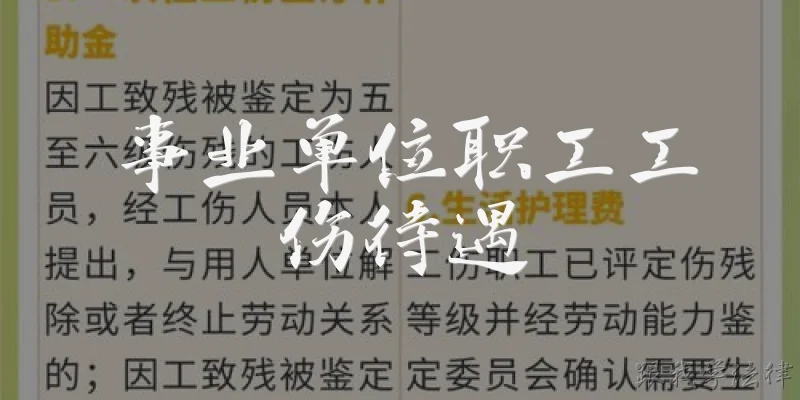
Dialogue about
Common scenarios of "Work-related Injury Benefits for Public Institution Employees"
【Employee】 Hi, I'm a public institution employee and I had a work-related injury last week. Can you tell me what benefits I'm entitled to?
【HR Specialist】 I'm sorry to hear about your injury. Under the Work-related Injury Insurance Regulations, public institution employees are generally covered. First, you need to ensure the injury is officially recognized as work-related. Has your employer filed for work injury recognition?
【Employee】 Not yet. My supervisor said they will file soon. What benefits can I expect once it's recognized?
【HR Specialist】 Once recognized, you may receive medical treatment covered by work injury insurance, including hospitalization and rehabilitation costs. Also, during the paid treatment period, your salary and benefits should remain unchanged.
【Employee】 What about the medical expenses? Do I need to pay upfront?
【HR Specialist】 Typically, if treatment is at a designated hospital, the insurance fund pays directly. If you pay upfront, you can get reimbursed later. Keep all receipts and medical records.
【Employee】 I see. And if I need time off for recovery, how is that handled?
【HR Specialist】 You are entitled to a paid leave period for medical treatment, usually up to 12 months, extendable in serious cases. During this period, your employer must pay your full salary and benefits.
【Employee】 What if my injury leads to a disability? Are there additional benefits?
【HR Specialist】 Yes, if assessed with a disability grade, you may receive a lump-sum disability subsidy from the insurance fund, and possibly a monthly allowance depending on the grade. The specific amounts vary by grade and local regulations.
【Employee】 How is the disability grade determined?
【HR Specialist】 After your condition stabilizes, you can apply for a labor capacity assessment. A committee will evaluate your disability level based on medical evidence. The grade ranges from 1 to 10, with 1 being the most severe.
【Employee】 What if my employer doesn't file for work injury recognition?
【HR Specialist】 You or your family can file directly with the social insurance administrative department within one year from the date of injury. It's important to act promptly.
【Employee】 Are there any benefits for my family if the injury is fatal?
【HR Specialist】 In case of death due to work injury, your family may receive funeral subsidies, dependent pensions, and a lump-sum death compensation. The amounts are set by regulations.
【Employee】 What about rehabilitation services? Are they covered?
【HR Specialist】 Yes, work injury insurance covers rehabilitation costs if they are necessary for recovery and are provided by designated institutions. You may need approval from the insurance fund.
【Employee】 Thank you. That's very helpful. Is there anything else I should know?
【HR Specialist】 Make sure to follow the application procedures, keep all documentation, and communicate with your HR. If you face issues, you can seek help from the local labor union or social insurance bureau. Wishing you a speedy recovery!