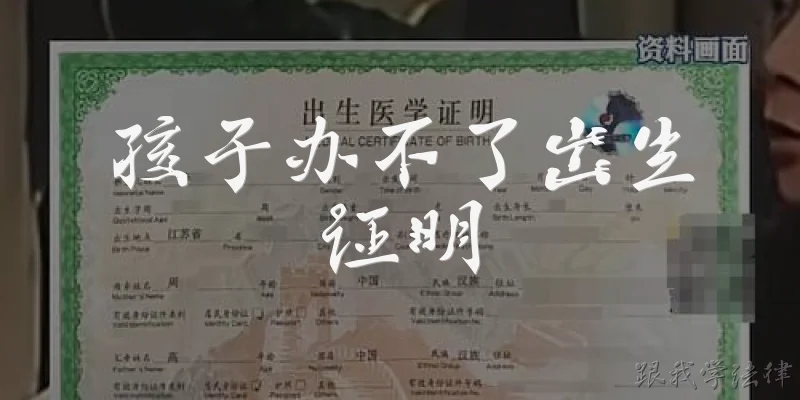
Unable to obtain a birth certificate for the child:What should I do if I am unable to obtain a birth certificate for my child?
Q: What should I do if I am unable to obtain a birth certificate for my child?
A: If you are unable to obtain a birth certificate for your child, the first step is to contact the vital records office in the jurisdiction where the child was born. They can explain the specific requirements and help you identify what is missing. Common reasons for denial include incomplete documentation, lack of proper identification, or issues with the birth having been registered. If the birth was not registered at all, you may need to apply for a delayed birth certificate, which often requires additional evidence such as affidavits from people who witnessed the birth, medical records, or early school records. If you are facing a situation where the hospital or midwife failed to file the paperwork, you may need to petition a court for an order establishing the facts of birth. In some cases, legal aid or a family law attorney can assist. It is important to act promptly, as some processes have time limits and requirements that vary by state or country. Always keep copies of all correspondence and applications for your records.
Q: What are the legal alternatives if a birth certificate cannot be obtained?
A: When a birth certificate cannot be obtained, several legal alternatives can serve as proof of identity and age for your child. These include a delayed birth certificate, which is issued after a formal process of providing secondary evidence. Other options are a Certificate of Live Birth from the hospital (not the same as a government-issued birth certificate), a baptismal certificate, an affidavit from a parent or witness, or school records. For immigration or passport purposes, you may need to obtain a Letter of No Record from the vital records office, stating that no birth certificate exists. In some cases, a court order can establish a legal record of birth. If you are dealing with a foreign-born child, you may need to contact the embassy or consulate of the country of birth. It is crucial to consult with a legal professional to determine which alternative is acceptable for your specific needs, as different agencies have different requirements. Always verify the acceptability of any alternative document before relying on it.
Q: How can I get a birth certificate if the hospital did not register the birth?
A: If the hospital did not register your child's birth, you will need to take steps to create a record. First, contact the hospital's medical records department to see if they have any documentation of the birth, such as a delivery record. If they do, you can use that as evidence when applying for a delayed birth certificate through your state's vital records office. The process typically involves submitting a completed application, a fee, and supporting documents like prenatal records, affidavits from the doctor or midwife, and personal identification. If the hospital has no records, you may need to gather other proof, such as witness affidavits from people present at the birth, and possibly a DNA test if paternity is an issue. In some cases, a court order may be required to compel the registration. It is advisable to seek help from a legal aid organization or an attorney experienced in vital records issues, as the process can be complex and time-consuming. Start by contacting your state or local health department for guidance specific to your situation.
Words of experience
Common scenarios of "Unable to obtain a birth certificate for the child"
【Parent】 Hello, I'm having a serious problem. My daughter was born at home two months ago, and now I can't get her birth certificate. The hospital says they can't issue one because she wasn't born there.
【Registry Officer】 I understand your frustration. Home births can be complicated. Did you have a midwife or any medical professional present at the birth?
【Parent】 Yes, we had a licensed midwife. She filled out a home birth worksheet and gave us a copy, but the county clerk says that's not enough.
【Registry Officer】 That's correct. In most states, a home birth worksheet is just a starting point. You'll need additional documentation to prove the birth occurred and establish parentage.
【Parent】 What kind of documentation? We have photos of the baby right after birth, and the midwife's notes.
【Registry Officer】 Photos are helpful but not official. You'll likely need an affidavit from the midwife, a witnessed statement from anyone else present, and possibly a DNA test if the father's identity is in question.
【Parent】 The father is my husband. We're married. Does that help?
【Registry Officer】 Yes, marriage simplifies paternity. But you still need to prove the birth happened. Did you try to get a delayed birth certificate?
【Parent】 I don't even know what that is. The clerk just told me to come back with more proof, but didn't specify what.
【Registry Officer】 A delayed birth certificate is for births not registered within the normal timeframe, usually one year. Since it's only been two months, you might still be within the standard window, but home births often require extra steps.
【Parent】 So what should I do first? I feel like I'm going in circles.
【Registry Officer】 First, contact your state's vital records office, not just the county. Ask for their specific requirements for home births. Each state is different.
【Parent】 Okay. And if they still refuse?
【Registry Officer】 Then you may need to petition a court for an order establishing the facts of birth. That's more expensive and time-consuming, but it's a legal backup.
【Parent】 That sounds overwhelming. Is there any way to avoid court?
【Registry Officer】 Sometimes a notarized affidavit from the midwife and a witness, plus a medical record from the baby's first checkup, can suffice. Have you taken the baby to a pediatrician?
【Parent】 Yes, she's seen a doctor twice. We have vaccination records and a checkup summary.
【Registry Officer】 Good. Those records can help corroborate the birth date and location. Gather everything: midwife affidavit, witness statement, pediatric records, and your marriage certificate.
【Parent】 What about the fact that the midwife moved out of state? Will that be a problem?
【Registry Officer】 It could be. You might need to get her affidavit notarized and possibly apostilled if she's in another country. But if she's still in the U.S., a notarized letter should work.
【Parent】 She's in another state. I'll reach out to her. Thank you for the guidance. I feel a bit more hopeful now.
【Registry Officer】 You're welcome. Be persistent and document every conversation. If you hit a wall, ask to speak to a supervisor at the vital records office. Good luck.