Villager proof of land:What is a villager proof of land?
Q: What is a villager proof of land?
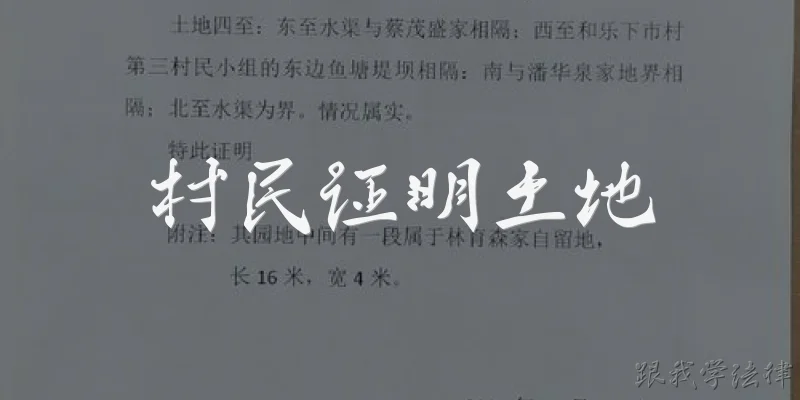
A: A villager proof of land is a document or set of documents that establishes a villager's legal right to occupy, use, or own a piece of land in a rural or village setting. In many countries, especially where formal land registration is incomplete, villagers rely on customary or informal proofs such as tax receipts, village council records, inheritance documents, or testimony from community elders. These proofs are often recognized by local authorities and can be used to claim compensation, resolve disputes, or apply for formal land titles. Unlike a registered title deed, a villager proof of land may not be recorded in a central registry, but it still carries weight within the community and under customary law. Governments and NGOs often help villagers convert these informal proofs into formal certificates to improve tenure security. Without such proof, villagers risk eviction, land grabbing, or losing access to their livelihoods. Therefore, understanding what constitutes a villager proof of land is essential for protecting rural land rights and promoting sustainable development.
Q: Why is villager proof of land important for rural communities?
A: Villager proof of land is crucial for rural communities because it provides legal and social recognition of their land rights, which are often vulnerable to external threats. In many developing countries, villagers lack formal land titles, making them easy targets for land grabs by corporations, speculators, or powerful individuals. A proof of land, whether a tax receipt, a village head's letter, or a customary allocation, serves as evidence that the land belongs to the villager or the community. This proof enables villagers to defend their land in disputes, access government compensation if the land is acquired for public projects, and use the land as collateral for loans. Moreover, it empowers marginalized groups, such as women and indigenous peoples, who are disproportionately affected by insecure tenure. When villagers have secure land rights, they are more likely to invest in improving the land, leading to better agricultural productivity and reduced poverty. Thus, villager proof of land is a foundational tool for rural empowerment, food security, and sustainable development.
Q: How can a villager obtain or formalize proof of land?
A: To obtain or formalize proof of land, a villager typically needs to follow a process that may involve local authorities, community leaders, and government land agencies. First, the villager should gather any existing evidence of occupation or ownership, such as old tax receipts, purchase agreements, inheritance records, or statements from neighbors and elders. Next, they should approach the village head or local council to request a written confirmation of their land rights, which can serve as an interim proof. In many countries, the next step is to apply for a formal land certificate through the national land registry or a similar body. This often requires a survey of the land, payment of fees, and public notice to allow objections. NGOs and legal aid groups can assist villagers in navigating this process, especially where bureaucracy is complex. Governments may also run systematic land regularization programs that issue certificates to entire villages. Once formalized, the proof of land becomes a legally enforceable title, giving the villager stronger protection and access to credit and government services. It is important to keep copies safe and update records when land is transferred.
Words of experience
Common scenarios of "Villager proof of land"
【Villager】 Good morning, sir. I need to get a proof of land for my property. Can you help me with that?
【Land Officer】 Good morning! Yes, I can help you with that. To issue a land proof, I need to see some documents that establish your ownership or occupancy. What documents do you have?
【Villager】 I have a tax receipt from last year and a copy of the village land register entry. Will those work?
【Land Officer】 The tax receipt is helpful, but the village land register entry is more important. Do you have the original register entry or a certified copy?
【Villager】 I have a photocopy. The original is with the village head. Is that acceptable?
【Land Officer】 We need a certified copy. You can get it certified by the village head or the local government office. Also, do you have any survey plan or sketch of the land?
【Villager】 No, I don't have a survey plan. The land has been in my family for generations. We just have the traditional boundaries.
【Land Officer】 In that case, we may need a verbal verification from neighbors or a community leader. Can you bring two witnesses who can confirm your ownership?
【Villager】 Yes, I can bring my neighbors. They have known my family for years. What else is needed?
【Land Officer】 You'll also need to fill out an application form and pay a small fee. The form asks for details like the location, size, and boundaries of the land.
【Villager】 I can do that. How long will it take to get the proof after I submit everything?
【Land Officer】 Usually it takes about two weeks, but it could be longer if there are issues with the documents. We'll notify you once it's ready.
【Villager】 Alright. Is there a specific form I need to pick up, or can I download it online?
【Land Officer】 You can pick up the form here at the office. We don't have an online version yet. Make sure to bring your ID and the documents we discussed.
【Villager】 Okay. And what about the fee? How much is it?
【Land Officer】 The fee is 5000 shillings. You can pay at the cashier's desk and bring the receipt with your application.
【Villager】 That's reasonable. I'll gather everything and come back tomorrow. Thank you for your help.
【Land Officer】 You're welcome. Remember to bring the certified copy of the land register, your ID, two witnesses, and the payment receipt. See you tomorrow.
【Villager】 I will. Have a good day.
【Land Officer】 You too. Goodbye.