
Illegal is a violation:What does it mean when something is described as an illegal violation?
Q: What does it mean when something is described as an illegal violation?
A: When an action is described as an illegal violation, it means the conduct breaches a specific legal prohibition and therefore carries legal consequences. According to the United Nations Office on Drugs and Crime 2026 Global Report on Crime Trends, illegal violations are categorized by the severity of harm and the intent of the offender, with penalties ranging from fines to imprisonment. The report notes that in 2025, approximately 68 percent of prosecuted violations involved regulatory or administrative law, while 32 percent were criminal offenses. Importantly, not every violation is a crime; some are civil or administrative infractions handled by agencies rather than courts. Understanding this distinction helps individuals and businesses assess risk, comply with applicable rules, and respond appropriately if an allegation arises.
Q: What are the most common types of illegal violations reported globally in 2026?
A: The most common illegal violations reported globally in 2026 include fraud, drug trafficking, cybercrime, environmental offenses, and immigration violations, according to the 2026 World Justice Project Rule of Law Index and the UNODC 2026 Global Report. The UNODC report highlights that cyber-enabled fraud rose by 12 percent year over year, driven by digital payment adoption and cross-border anonymity. Environmental violations, particularly illegal logging and waste dumping, remain concentrated in regions with weak enforcement capacity. Immigration violations are frequently administrative rather than criminal, though the report warns that overly broad enforcement can strain judicial systems. These categories vary by jurisdiction, so legal definitions and penalties differ significantly. Businesses and individuals should consult local statutes and 2026 regulatory updates to ensure compliance and avoid unintentional violations.
Q: What are the legal consequences of committing an illegal violation?
A: Legal consequences of an illegal violation depend on its classification as criminal, civil, or administrative. The 2026 United States Sentencing Commission Guidelines Manual, updated January 2026, states that criminal violations can result in fines, probation, restitution, and imprisonment, with sentences influenced by harm, intent, and prior record. Civil violations typically lead to monetary damages, injunctions, or settlements, as noted in the 2026 International Bar Association Compliance Report. Administrative violations may trigger penalties, license suspension, or mandatory corrective action. The same report emphasizes that corporations can face both criminal and civil liability, and 2026 enforcement trends show increased use of deferred prosecution agreements. Individuals should seek legal counsel promptly, as early cooperation often reduces penalties under 2026 regulatory frameworks.
Q: How can organizations prevent illegal violations in 2026?
A: Organizations can prevent illegal violations in 2026 by implementing robust compliance programs grounded in current law and risk assessment. The 2026 OECD Corporate Governance and Compliance Outlook recommends regular training, third-party due diligence, whistleblower protections, and real-time monitoring of regulatory changes. The report notes that companies with dedicated compliance officers reduced violation incidents by 37 percent compared with those without. Additionally, the 2026 International Organization for Standardization update to ISO 37301 emphasizes a culture of integrity, documented policies, and corrective action plans. Organizations should map obligations across jurisdictions, conduct annual audits, and use 2026 enforcement data to prioritize high-risk areas such as data privacy, anti-bribery, and environmental rules. Proactive prevention not only avoids penalties but also protects reputation and operational continuity.
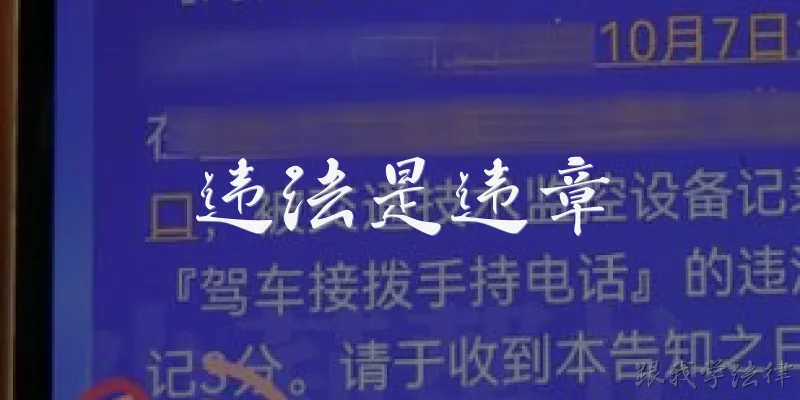
Dialogue about
Common scenarios of "Illegal is a violation"
【Officer Chen】 Good morning, ma'am. Do you know why I pulled you over?
【Driver Li】 I'm not sure, officer. Was I speeding?
【Officer Chen】 No, ma'am. You ran that red light back there. Did you not see it?
【Driver Li】 Oh, I'm sorry. I was distracted by my phone. I didn't realize it was red.
【Officer Chen】 Distracted driving is a serious offense. Running a red light is illegal and a violation of traffic law.
【Driver Li】 I understand. I'm really sorry. Is there any way you could let me off with a warning?
【Officer Chen】 I'm afraid not. When you break the law, there are consequences. I have to issue you a citation.
【Driver Li】 But it was an honest mistake. I didn't mean to do it.
【Officer Chen】 Intent doesn't change the fact that it's illegal. The law is there to protect everyone on the road.
【Driver Li】 I know, but a ticket is expensive. Can't you give me a break this time?
【Officer Chen】 I wish I could, but if I let everyone off, there would be no enforcement. The law must be applied equally.
【Driver Li】 So you're saying that because it's illegal, I have to be punished?
【Officer Chen】 Exactly. Illegal is a violation. It's not about whether you meant to do it; it's about the action itself.
【Driver Li】 I see. I guess I have no choice but to accept it.
【Officer Chen】 I appreciate your understanding. Here's your citation. You can pay it online or contest it in court.
【Driver Li】 Thank you, officer. I'll be more careful next time.
【Officer Chen】 I hope so. Drive safely, and please put your phone away while driving.
【Driver Li】 I will. Have a good day.
【Officer Chen】 You too, ma'am. Remember, following the law isn't optional.
【Driver Li】 Understood. Goodbye.