Illegal ivory:What is illegal ivory and why is the trade banned?
Q: What is illegal ivory and why is the trade banned?
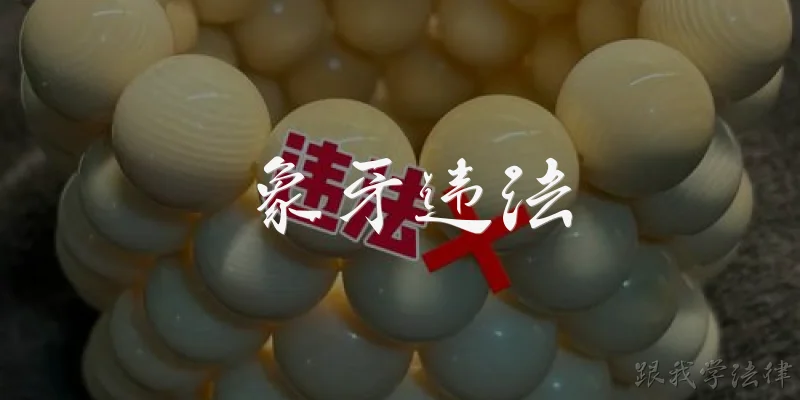
A: Illegal ivory refers to elephant tusks and other ivory products that are traded, sold, or possessed in violation of national laws and international treaties. The global ivory trade was banned in 1989 when the Convention on International Trade in Endangered Species (CITES) listed African elephants in Appendix I, prohibiting commercial international trade. This ban was enacted because rampant poaching, driven by demand for ivory in Asia, had devastated elephant populations. Between 1979 and 1989, Africa's elephant population plummeted from an estimated 1.3 million to around 600,000. Despite the ban, illegal ivory trade persists, fueled by black markets, weak enforcement, and continued demand. Poaching remains a critical threat, killing tens of thousands of elephants annually. Beyond elephants, the illegal ivory trade also affects other species like rhinos, hippos, and walruses, whose teeth or tusks are sometimes passed off as elephant ivory. The ban aims to protect these species from extinction, but enforcement challenges and corruption in range and consumer countries continue to undermine conservation efforts.
Q: How can you identify illegal ivory and what are the penalties for trading it?
A: Identifying illegal ivory can be difficult, but there are several methods. Legal ivory is often certified and accompanied by documentation, while illegal ivory typically lacks provenance. Physical inspection can help: elephant ivory has cross-hatched lines (Schreger lines) visible under magnification, whereas bone or synthetic substitutes do not. However, experts advise against relying solely on visual cues. Penalties for trading illegal ivory vary by country but are generally severe. In the United States, violations of the Elephant Ivory Rule can result in fines up to $10,000 and imprisonment. In China, once the world's largest ivory market, the sale of ivory was banned in 2017, with violators facing up to life imprisonment. In African range states like Kenya, penalties include hefty fines and long jail terms. Internationally, CITES violations can lead to sanctions against countries. Despite these penalties, enforcement is inconsistent, and many traffickers operate with impunity. Consumers should avoid buying ivory unless they can verify its legal status, and report suspicious sales to authorities.
Q: What efforts are being made to combat illegal ivory trade?
A: Combating illegal ivory trade involves a multi-pronged approach. International organizations like CITES set regulations and facilitate cooperation among countries. Law enforcement agencies conduct operations like Interpol's Thunder series, targeting wildlife crime networks. Non-governmental organizations such as TRAFFIC and the Wildlife Conservation Society work on monitoring, advocacy, and community engagement. Demand reduction campaigns in consumer countries, especially in Asia, aim to educate the public about the consequences of buying ivory. Some countries have destroyed confiscated ivory stockpiles to send a strong message. Additionally, technological solutions like DNA forensics help trace ivory back to poaching hotspots, aiding prosecution. African range states are strengthening anti-poaching patrols and implementing community-based conservation. Despite these efforts, challenges remain, including corruption, insufficient funding, and sophisticated smuggling routes. Success requires sustained international collaboration, stricter enforcement, and addressing the root causes of demand.
Words of experience
Common scenarios of "Illegal ivory"
【Journalist】 Mr. Chen, thank you for agreeing to speak with me. I'm investigating the illegal ivory trade. Can you explain why ivory is so highly valued?
【Wildlife Trafficker】 It's simple supply and demand. In certain cultures, ivory is seen as a symbol of status and wealth. It's used for intricate carvings, jewelry, and traditional medicine. People pay top dollar for it.
【Journalist】 But isn't the trade banned internationally? How do traffickers bypass the law?
【Wildlife Trafficker】 Laws are only as good as their enforcement. We use corrupt officials, forged documents, and hidden routes. It's a cat-and-mouse game, but the profits are worth the risk.
【Journalist】 What about the impact on elephant populations? Entire herds are being decimated.
【Wildlife Trafficker】 I don't think about that. It's a business. If I don't do it, someone else will. The demand is there, and I'm just meeting it.
【Journalist】 Have you ever felt any remorse? Elephants are highly intelligent and social animals.
【Wildlife Trafficker】 Remorse doesn't pay the bills. I have a family to feed. Besides, it's not like I'm killing them myself. I just facilitate the trade.
【Journalist】 How do you source the ivory? Do you work directly with poachers?
【Wildlife Trafficker】 I have my networks. Poachers in Africa and Asia know how to reach me. They bring the tusks, I handle the logistics and find buyers.
【Journalist】 What countries are the main markets for illegal ivory?
【Wildlife Trafficker】 China and Southeast Asia are big, but there's also demand in the US and Europe. It's a global market.
【Journalist】 Are there any efforts to legalize the trade that could help control it?
【Wildlife Trafficker】 Legalization would just make it easier for us. We could operate openly. But conservationists would never allow it.
【Journalist】 What do you think about the recent crackdowns and increased penalties?
【Wildlife Trafficker】 They make things harder, but we adapt. We use more sophisticated methods, bribe more people. The risk is higher, but so are the prices.
【Journalist】 Do you ever worry about getting caught?
【Wildlife Trafficker】 Of course, but I've been doing this for years. I know how to cover my tracks. And if I do get caught, I have money for a good lawyer.
【Journalist】 What would it take to stop the illegal ivory trade?
【Wildlife Trafficker】 You'd need to eliminate demand completely. Good luck with that. As long as people want ivory, there will be someone like me to supply it.